

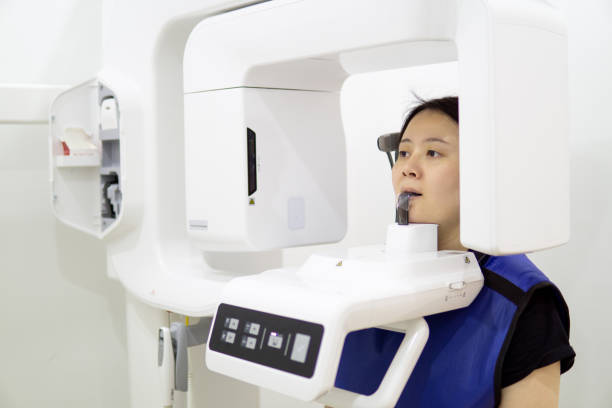
If you have ever typed “oral radiologist near me” into search engines after staring at a CBCT scan you were not fully confident reading, you are not alone. Thousands of dentists, endodontists, oral surgeons, and orthodontists run that exact search every month — and most of them discover the same frustrating truth: there simply are not enough oral and maxillofacial radiologists to go around.
Here is the good news. The answer to your search is probably not down the street. It is online. Remote CBCT reading services have quietly transformed how dental practices access specialist-level imaging interpretation, and in this guide, we will explain exactly how it works, why it often beats a local referral, and what to look for when choosing a provider.
The Quick Answer: How Do I Find an Oral Radiologist Near Me?
Let’s answer the question directly, because that is what you came here for.
To find an oral radiologist, you have three realistic options: (1) contact a nearby dental school with an oral radiology department, (2) ask your local dental society for a referral, or (3) use a remote cbct reading service that accepts DICOM files online and returns a written radiology report — usually within days. For the vast majority of practices, the third option is the fastest, most reliable, and most affordable route, because board-certified oral and maxillofacial radiologists are rare, and very few of them practice within driving distance of any given clinic.
In other words: the “near me” you are looking for is now “near your inbox.”
Why “Near Me” Searches Rarely Find a Local Oral Radiologist
Oral and maxillofacial radiology is one of the smallest recognized dental specialties in North America. There are only a few hundred certified specialists serving tens of thousands of dental practices across the continent. Most of them work in universities, hospitals, or large imaging centers concentrated in major metropolitan areas.
So when a dentist in a smaller city — or even a large one — searches for a specialist in radiology oral health, the results are usually general imaging centers, not a certified oral radiologist who can produce a diagnostic report on your patient’s cone beam scan. Even searches like “3d cbct scan near me” typically surface places to take a scan, not experts to interpret one.
That gap between imaging availability and interpretation expertise is exactly what remote reporting was built to close.
What Is a Remote CBCT Reading Service?
A remote CBCT reading service (also called teledentistry radiology or cbct interpretation services) is a professional arrangement where you securely upload your patient’s 3d cbct scan — the original DICOM files — to a certified oral and maxillofacial radiologist, who then reviews the full volume and returns a formal, written cbct radiology report.
The workflow at 3D Maxillofacial Diagnostics looks like this:
- You acquire the scan in your practice or at a local imaging center.
- You upload the original DICOM files along with clinical notes and your referral question.
- A certified oral and maxillofacial radiologist reviews the entire volume — not just the region you were focused on.
- You receive a comprehensive written report with radiologic findings, impressions, differentials, and recommendations.
No travel. No waiting rooms. No geographic limits. A dentist in Toronto, Texas, or Taupo gets the same specialist expertise as one located next door to a dental school.
Remote vs. Local: Why Distance Stopped Mattering
Radiology is unique among dental specialties in one important way: the entire diagnostic process happens on a screen. Unlike surgery or hygiene, dental cbct interpretation does not require the specialist and the patient to be in the same room — or even the same country.
Here is how remote reporting compares with hunting for a local specialist:
| Factor | Local Referral | Remote CBCT Reporting |
|---|---|---|
| Availability | Limited to major cities and universities | Available to any practice with internet access |
| Turnaround | Days to weeks (appointment-based) | Typically fast, report-based turnaround |
| Cost | Often higher; may involve patient travel | Predictable per-report pricing |
| Scope | Depends on local expertise | Full-volume review by a certified specialist |
| Convenience | Patient may need a second visit | Patient never leaves your chair |
For practices searching 3d dental imaging toronto or similar city-specific terms, remote services offer something even a well-served city cannot: you choose your radiologist based on qualifications, not postal code.
What Should a Professional CBCT Report Include?
Not all reports are created equal. Whether you are evaluating a provider or comparing your current one against a dental cbct report template, a professional cbct report dental document should contain:
- Patient and scan details — field of view, voxel size, scan date, and the clinical question you submitted.
- Systematic review of the entire volume — every cbct 3d image contains anatomy beyond your region of interest, and incidental findings (sinus pathology, calcifications, osseous lesions) are common.
- Radiologic findings and impressions — a clear description of what is seen, written in language you can act on and share.
- Differential diagnoses — when a definitive diagnosis cbct alone cannot provide, the report should list reasonable differentials and recommend clinical correlation, biopsy, or further imaging.
- Clinically relevant measurements — bone height and width for implant sites, proximity to the inferior alveolar canal, root-to-lesion relationships, and so on.
- Recommendations — next steps that support your treatment planning and documentation.
A structured report like this does more than answer your question. It becomes part of your medico-legal record, demonstrating that the full volume was reviewed by a qualified specialist — something increasingly expected of practices that own a cbct 3d xray unit.
When Should a Dentist Refer a CBCT Scan for Interpretation?
You do not need a radiologist for every scan. But certain situations strongly warrant a formal interpretation of cbct scans by a specialist:
Implant planning. An implant site assessment confirms bone volume and density, screens for pathology, and maps critical anatomy before surgery. Cross-sectional and panoramic reconstructions with measurements reduce surgical risk and support informed consent.
Suspected or incidental pathology. If you spot a radiolucency, radiopacity, or anything that makes you pause, a comprehensive pathology interpretation gives you radiologic impressions and differentials before you decide on biopsy or referral.
TMJ evaluation. Chronic pain, joint noise, limited opening, or trauma history call for expert analysis of condylar morphology, joint space, cortical integrity, and degenerative changes — and MRI interpretation when soft tissue structures like the articular disc are in question.
Impacted teeth. Third molars, canines, and supernumeraries near the inferior alveolar canal, adjacent roots, or the sinus deserve 3D spatial evaluation before extraction or orthodontic exposure.
Complex endodontic cases. Small field-of-view 3d cbct dental scans reveal missed canals, root fractures, resorptive defects, and periapical pathology that 2D imaging cannot — but reading them accurately takes specialist training.
If a case falls into any of these categories, the safest and most efficient move is a written report from a certified oral and maxillofacial radiologist.
The Liability Question Every CBCT Owner Should Consider
Here is something many practices learn the hard way: when you acquire a cbct 3d dental volume, you are generally responsible for everything in it — not just the tooth or site you were investigating.
A large field of view can capture the sinuses, airway, cervical vertebrae, skull base, and soft tissue spaces. Pathology in any of these regions, if missed, can become a serious clinical and legal problem. Most general dentists are not trained — and should not be expected — to systematically review these areas.
Partnering with a remote cbct reading service solves this cleanly. Every volume gets a full specialist review, every finding gets documented, and your records show that a certified radiologist evaluated the scan. It protects your patients first, and your practice second.
Meet the Expertise Behind 3D Maxillofacial Diagnostics
Credentials matter enormously in radiology, so let us be transparent about ours.
3D Maxillofacial Diagnostics is led by Dr. Shereen Shokry, DDS, MSc, PhD — a Canadian Certified Oral and Maxillofacial Radiologist with more than 20 years of global experience in oral radiology as a clinician, educator, and imaging consultant. Every report reflects that depth: precision in the findings, clarity in the language, and confidence you can carry into your treatment planning.
Our reporting services cover the full spectrum of maxillofacial imaging:
- CBCT pathology interpretation — osseous and dental lesions, soft tissue calcifications, sinus abnormalities, and incidental findings
- Implant site assessment — bone volume, density estimates, anatomic proximity, and pathology screening
- TMJ CBCT analysis — condylar morphology, joint space, and degenerative changes
- MRI TMJ interpretation — disc position, effusion, and internal derangement
- Impaction assessment — 3D evaluation of third molars, canines, and supernumeraries
- Endodontic evaluation — root canal anatomy, missed canals, fractures, and periapical pathology
We are based in Mississauga, Ontario — so if you genuinely were searching for 3d dental imaging toronto expertise, we are your local specialists too. But our reporting services support dental professionals everywhere.
How to Submit a Scan: Getting It Right the First Time
Report quality starts with scan quality. To get the most diagnostic value from your submission:
- Send original DICOM files, not screenshots or PDF exports (2D panoramic, cephalometric, and intraoral images are the exception).
- Minimize motion artifacts — patient movement during acquisition degrades every slice.
- Use an appropriate field of view that fully captures the area of interest.
- Remove metal appliances and jewelry where possible to reduce beam hardening and scatter.
- Include clinical notes and your referral question — the more context the radiologist has, the more targeted and useful the report.
- For TMJ MRI, include both open and closed mouth views when available.
If a submitted scan falls short of diagnostic quality, a good service will tell you rather than guess — because a confident report built on a poor scan helps no one.
The Bottom Line
The search for an oral radiologist near me used to end in frustration. Today, it ends with a secure file upload. Remote cbct interpretation services have made specialist-level dental cbct interpretation accessible to every practice, in every city, at every scale — with faster turnaround, full-volume review, and documentation that protects both your patients and your practice.
Ready to experience expert reporting? Request a report from 3D Maxillofacial Diagnostics today, and get precision, clarity, and confidence in every radiology report — no matter where your practice is located.
Frequently Asked Questions
Is a remote CBCT report as reliable as an in-person consultation?
Yes. Radiologic interpretation is performed entirely on the imaging data, so a certified radiologist reviewing your DICOM files remotely sees exactly what they would see in person. What matters is the reader’s certification and experience, not their location.
How much does CBCT interpretation cost?
Most services charge per report, with pricing that varies by scan type and complexity. Compared to the clinical time you would spend reviewing a full volume yourself — and the risk of a missed finding — professional interpretation is one of the most cost-effective services a practice can outsource.
Can I use a remote service if I do not own a CBCT machine?
Absolutely. Many referring dentists send patients to a local imaging center for acquisition, then submit the DICOM files for independent specialist interpretation.
Do I still need to review the scan myself?
You remain the treating clinician, so reviewing the scan and correlating the report with your clinical findings is essential. The radiology report supports your diagnosis — final decisions always combine imaging, clinical examination, and patient history.
What is the difference between an oral radiologist and a medical radiologist?
An oral and maxillofacial radiologist completes dental training plus specialty education focused specifically on the teeth, jaws, TMJ, sinuses, and surrounding structures. Medical radiologists are highly skilled but rarely have the same focused expertise in dental and maxillofacial pathology.